Make Elderberry syrup
Ingredients & Spice Additions
- Dried Elderberries: 1 cup (~100g) OR Fresh/Frozen Elderberries: 2 cups (~200g)
- Water: 4 cups (1 liter)
- Raw Honey: 1 cup (added after cooling)
Spices add warming botanical benefits, act as natural antioxidants, and balance the tartness of the berries:
- Cinnamon: 1 to 2 whole cinnamon sticks (or 1 tsp ground)
- Fresh Ginger: 1 to 2 tablespoons sliced or grated (adds anti-inflammatory warmth)
- Whole Cloves: 4 to 6 whole cloves (or ¼ tsp ground cloves)
- Cardamom Pods (Optional): 3 to 4 gently crushed pods.
- Lemon Juice: 1 to 2 tablespoons fresh lemon juice (adds bright acidity and helps lower pH).
Preparation
Combine Berries, Water, and Spices: Do not add honey at this stage.
Place the fresh or dried elderberries, water, cinnamon, ginger, and cloves into a heavy-bottomed saucepan. Do not add sweetener yet.
Bring to a Boil, then Simmer (30–45 Minutes): Critical safety step to deactivate cyanogenic glycosides.
Bring the liquid to a rolling boil over medium-high heat. Reduce heat to a gentle simmer (around 160–180°F / 70–80°C) and cook uncovered for 30 to 45 minutes. The uncovered simmer allows water to evaporate until the liquid volume reduces by roughly half (yielding ~2 cups of juice concentrate) while deactivating toxins.
Strain and Press the Juice:
Remove the pot from the heat. Pour the mixture through a fine-mesh sieve or cheesecloth into a glass bowl. Press the berries gently with the back of a spoon to extract maximum liquid, avoiding over-squeezing seed tannins to prevent excess bitterness. Discard or compost the spent solids.
Cool Liquid Below 110°F (43°C):
Allow the concentrated elderberry juice to cool for 15 to 20 minutes. Verify with a thermometer that the liquid temperature is below 110°F (43°C) before moving to the next step.
Whisk in Honey and Lemon Juice:
Whisk in 1 cup of raw honey and 1–2 tablespoons of fresh lemon juice until completely dissolved. Keeping the temperature below 110°F ensures the raw honey’s live beneficial enzymes and antimicrobial properties remain intact.
Bottle and Refrigerate:
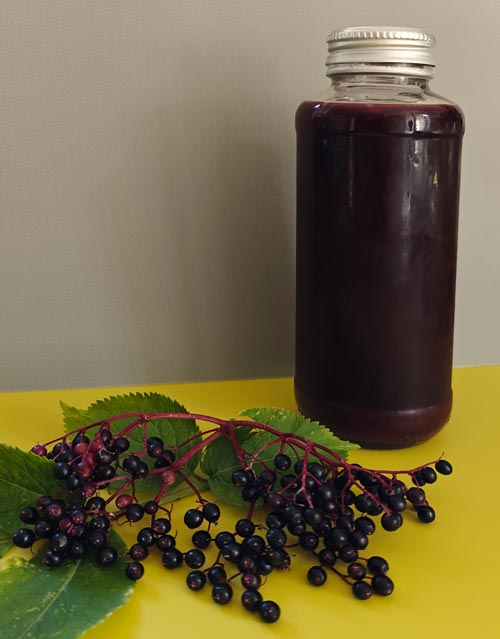
Pour the finished syrup into a sterilized dark glass jar or bottle. Label with the date and store in the refrigerator. Refrigerated syrup will keep for 2 to 3 months.
Safety Notes
- Neutralizing Glycosides & Lectins: Raw or undercooked elderberries (their leaves, stems, and seeds) contain cyanogenic glycosides (sambunigrin) and lectins. These compounds can cause severe nausea, vomiting, and gastrointestinal distress if consumed raw. Sustained heat (a minimum 30–45 minute simmer) is strictly required to deactivate these toxins.
- Destemming: Completely remove all green stems, leaves, and unripe (red/green) berries before cooking, as they hold the highest concentrations of toxins.
- Infant Safety: Never administer syrups containing honey to children under 1 year of age due to the risk of infant botulism.
- Canning Caution: Elderberries are a low-acid fruit (pH above 4.6). Home-cooked syrups should be stored in the refrigerator or frozen rather than shelf-stable water-bath canned unless a validated recipe incorporating high-acid additives (e.g., concentrated lemon juice) is strictly followed
Shelf life
To preserve elderberry juice as syrup, the required amount of honey depends on the target shelf life and storage conditions:
Equal-Parts Ratio
Amount: 1 liter of honey (approx. 1.4 kg) per 1 liter of elderberry juice (1:1 ratio by volume).
Shelf Life: 3 to 6 months in the refrigerator.
Reduced Sugar Ratio
Amount: 500 ml of honey (approx. 700 g) per 1 liter of elderberry juice (1:2 ratio).
Shelf Life: 3 to 4 weeks in the refrigerator.
How it works: Provides moderate preservation and natural sweetness, but requires faster consumption.
Extended Shelf Life
Because honey alone in home kitchens rarely lowers water activity enough for safe, un-refrigerated room-temperature storage, choose one of these methods for longer shelf life:
Add Alcohol: Stir in 250 ml of 40% ABV spirit (vodka or brandy) per liter of finished syrup to reach ~8–10% ABV, extending fridge/cellar life up to 1 year.
Freezing: Freeze the 1:1 or 1:2 syrup in sealed, head-spaced jars for up to 6–12 months.
Tip: Let the boiled/strained elderberry juice cool to below 110°F (43°C) before whisking in raw honey so you preserve its natural beneficial enzymes and antimicrobial properties.